A restful and good night’s sleep is essential for making everyday life run smoothly. We often say that a weighted blanket can be part of the solution, but it’s important to consider all factors and ensure good sleep hygiene. Here are 10 tips on what you can do to get better sleep and reduce the risk of sleep problems.
1. Establish a regular sleep routine
Having a consistent sleep routine is one of the most important factors for good sleep quality, so the first step toward better sleep is to establish a routine around your sleeping habits. Try to go to bed and wake up at the same time every day, even on weekends, to help your body regulate its internal clock.
2. Get some physical activity every day
Physical activity and exercise help you burn off the stress hormones that have built up during the day, making it easier for your body to relax. Be sure to avoid intense exercise less than 3 hours before bedtime, as it takes a little time for your body to wind down.

3. Make the Most of Daylight for Good Health
Try to get enough daylight every day! Light affects the production of melatonin, the hormone that regulates your sleep-wake cycle. The alternation between light and dark is therefore important for your body’s biological clock and for improving the quality of your sleep.
4. Make your bedroom a place for rest and sleep
Avoid working, watching TV, or using your cell phone in bed, as this can interfere with your ability to relax and fall asleep easily. Your bedroom should be a calm and relaxing place that signals to your body that it’s time to sleep.
5. Take a look at your bedroom environment
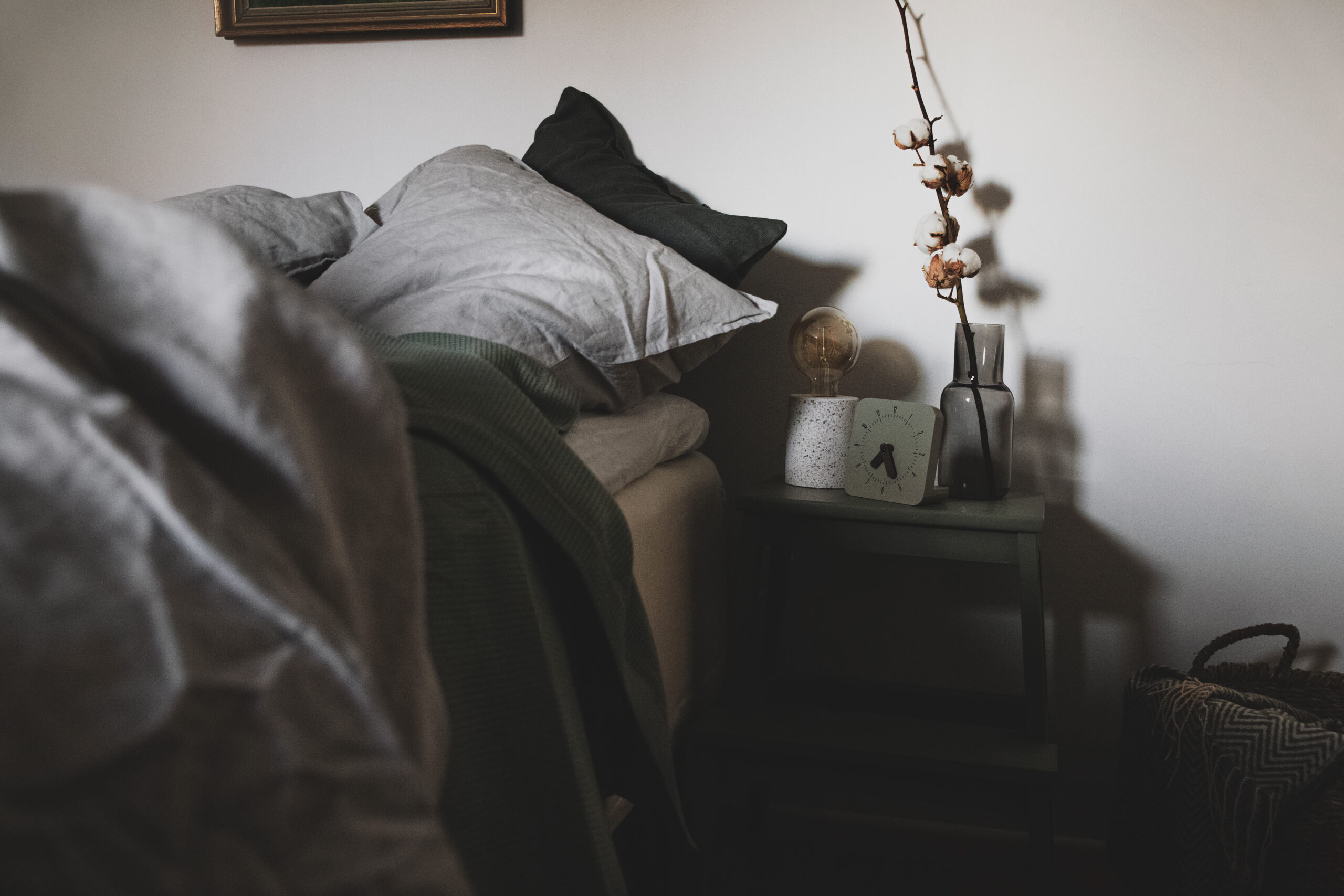
A tidy and organized bedroom creates a calm atmosphere that promotes a good night’s sleep. Change your bedding regularly to keep your sleeping area fresh and comfortable. Make sure the room is dark, quiet, and cool—around 16–18 degrees is ideal. A good mattress, an ergonomic pillow, and weighted blanket can further improve your sleep quality.
6. Avoid screens and blue light before bedtime
Blue light from screens inhibits melatonin production and makes it harder to fall asleep—in other words, the blue light from our screens stimulates the body and brain. Therefore, try to avoid using your cell phone, computer, and TV for at least an hour before going to sleep. Read a book, listen to calm music, or try relaxation exercises instead of scrolling on your phone. If you need to use a screen, enable a blue light filter or night mode to reduce the impact on your sleep.
7. Don’t go to bed hungry, and avoid eating late at night
It’s hard to fall asleep if your stomach is growling, but you should also avoid heavy meals late at night. If you feel hungry before bedtime, opt for a light evening snack like a banana, yogurt, or a handful of nuts.
8. Avoid sleeping during the day
If you have serious trouble sleeping, it’s a good idea to avoid napping during the day, as naps can disrupt your circadian rhythm and make it harder to sleep at night. Try to stay awake during the day to build up a natural need for sleep by evening. If you really need to rest, take a short power nap of no more than 20 minutes.

9. Avoid caffeine in the evening
How long it takes you to fall asleep, how deeply you sleep, and how long you sleep are all affected by caffeine from sources such as coffee, tea, energy drinks, and more. It can take up to several hours for your body to break down caffeine, so experiment to find out what works for you. Alcohol and nicotine also have a negative effect on sleep.
10. Wind down before bedtime
Make sure to wind down before you go to bed. A warm bath, meditation, or sitting for a while under weighted blanket or use a weighted vest can help.
Developing good sleep habits is a process that takes time, but small changes can make a big difference. Start by implementing two of the tips above, and then continue gradually. Be patient and listen to your body—the most important thing is to find a routine that works for you. With consistency and the right conditions for sleep, you’ll soon enjoy better sleep at night and more energy in your daily life.